Essay
5 min read
Designing with light you don’t own

Start by watching
Before we draw anything, we spend a full day in the space - morning, midday, late afternoon. We photograph the same corner every hour. What emerges is a map of where the room is generous and where it is thin, and that map decides the plan more often than the client’s wishlist does.
A north-facing room will never hold warm afternoon light. Fighting that with lamps produces a space that looks staged at noon and hollow at six. Accepting it produces a room that is calm all day.
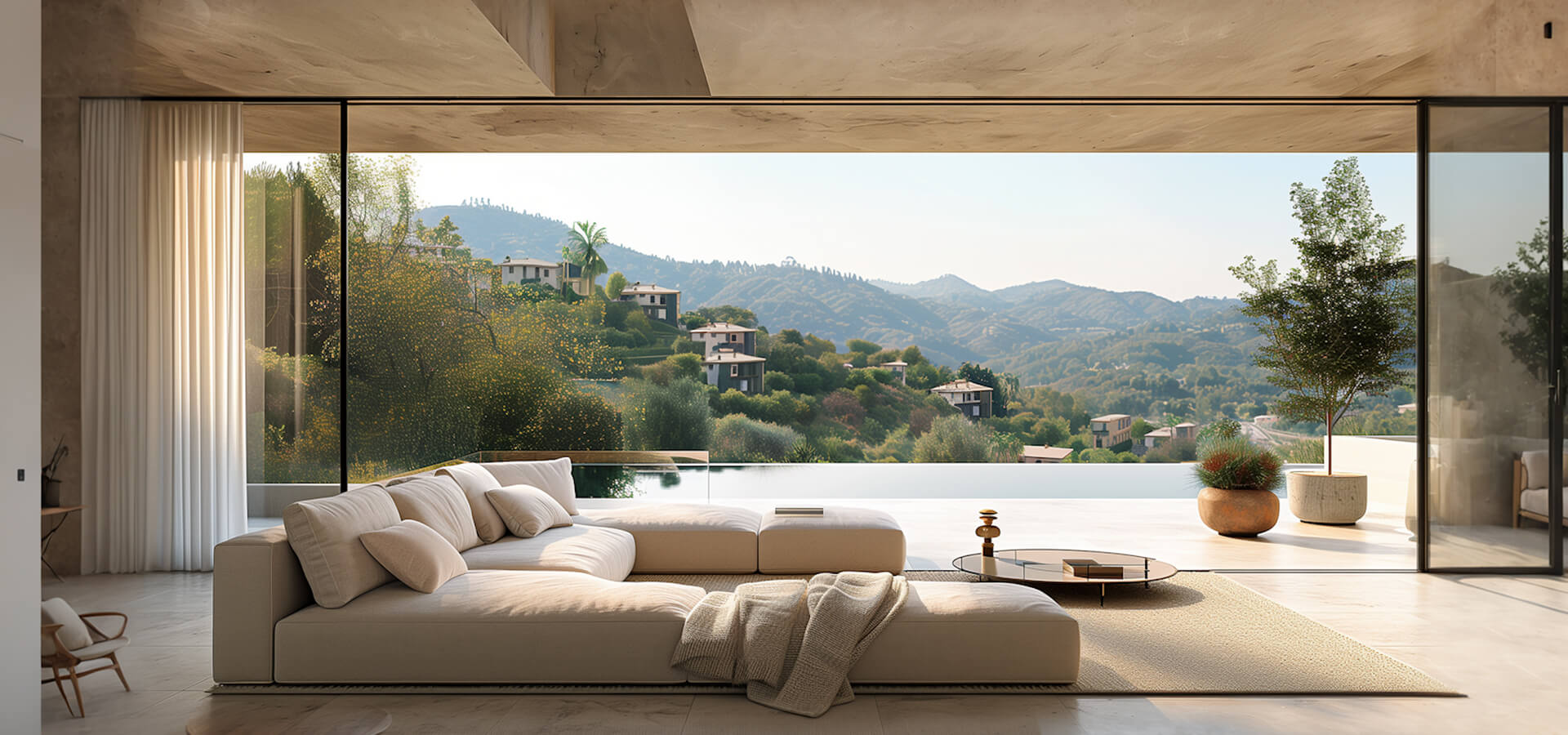
Villa Amara - the same wall at 9 am, 1 pm and 6 pm
Materials as instruments
Surfaces are the only real control we have. Lime plaster scatters light and softens a hard south exposure. Fumed oak absorbs it, which rescues a room that glares. Unlacquered brass gathers whatever warmth is left at the end of the day.
A dark room is not a problem to be lit. It is a room that wants different materials.
This is why we keep a small material library rather than a large one. Five or six surfaces we understand under every condition are worth more than fifty we have only seen in a showroom.
Artificial light, last
We specify fixtures at the end, never the beginning. Their job is to extend the character the daylight already established - not to invent a second, competing mood after dark. Warm, low, and layered: three sources per room, none of them overhead alone.
What it comes to
Designing with light you don’t own means giving up the fantasy of a perfect room and working with the one in front of you. The result is quieter than a rendering and considerably better to live in.